
Loading
the wiseduckdev

the wiseduckdev
Family Flow
Discover Family Flow, a React-based web app designed to simplify task sharing and planning in households. Co-developed as part of an intensive Web & Mobile Development program.
ROLE
- Product Manager
- Scrum Master
- Front-End Lead Developer
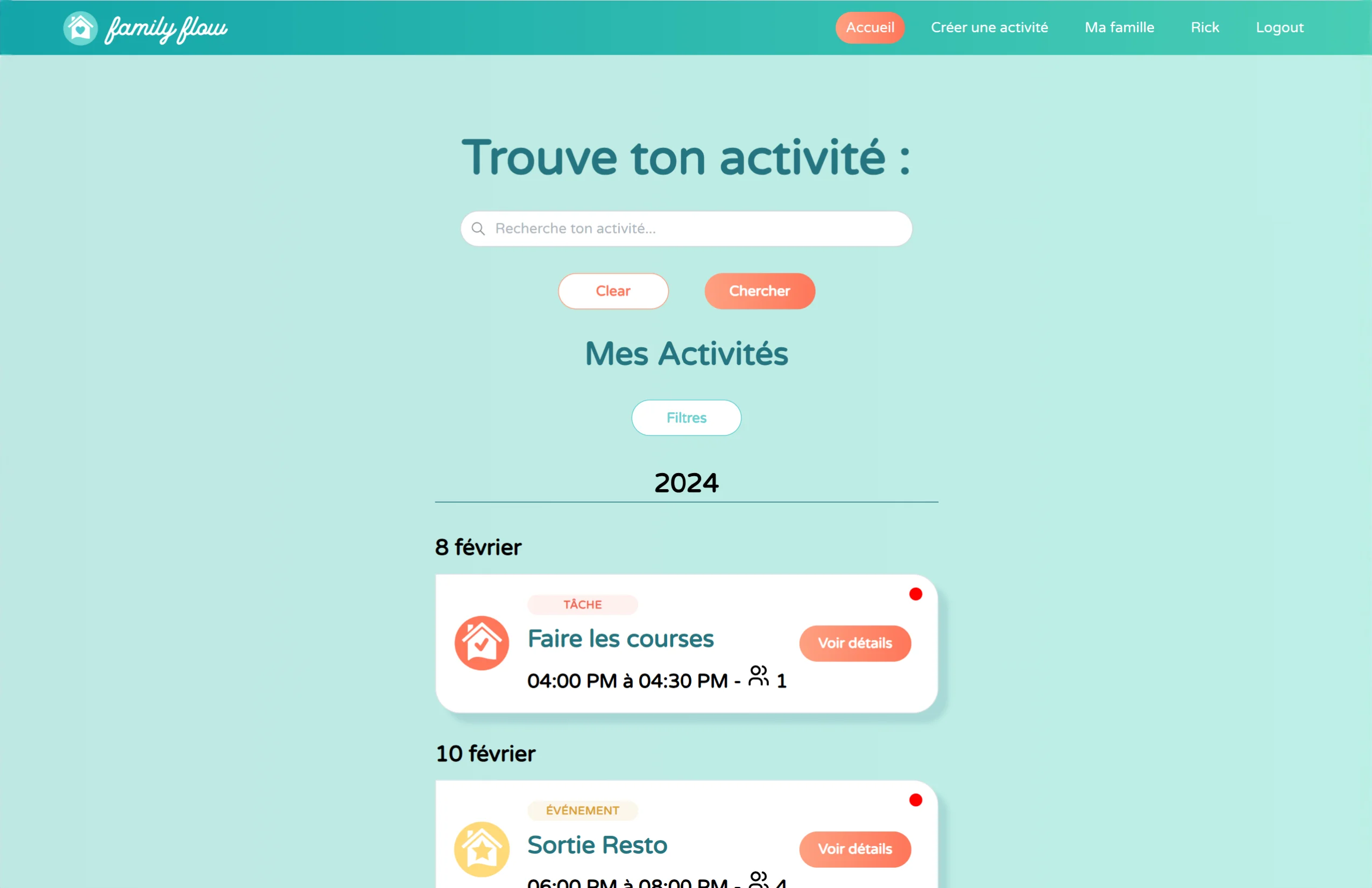
React-based task manager for modern families
In early 2024, I co-developed Family Flow, a web app designed to simplify task sharing and planning in households. The project began as a collaborative effort between two developers (including myself) and evolved into a fully functional productivity tool combining thoughtful UX and technical execution.
Project Overview
Family Flow is a collaborative web application designed to help families streamline task management and household organization. Built in collaboration with another developer, this tool aims to reduce mental overload and improve everyday communication between family members. The project was delivered as part of our final exam for O’clock’s intensive Web & Mobile Development program (1,500+ hours), with a public demo and live deployment.
My Role
I was deeply involved across multiple domains:
- Product Manager : defined features, roadmap, and target personas
- Scrum Master : led sprint planning and async communication
- Lead Frontend Developer : owned component architecture, UI state logic, and styling
This dual focus on technical depth and product thinking allowed me to make impactful decisions from both perspectives.
Creativity & Inspiration
The idea for Family Flow didn’t come from a client brief, it came from my own life.
I became a father just before starting my developer training. What struck me in those early months wasn’t just the sleepless nights, it was how quickly communication breaks down when a family is overwhelmed. Tasks pile up, everyone does their best, but things fall through the cracks. Misunderstandings grow. Frustration builds.
I realized: in today’s hyper-connected world, families lack a simple, shared space to align on what needs to be done, without friction or micromanagement. That’s where the idea for Family Flow came from: A calm, structured environment where each family member can view, assign, and manage tasks together, reducing cognitive load, minimizing conflict, and creating room for what matters most.
This project reflects my belief that creativity starts with observation. By identifying a problem in my daily life, I transformed it into a real solution, something many families could benefit from.

Stack and Tooling
- Front-End: React, TypeScript, Mantine UI, CSS, Sass, Axios, Day.js, dotenv
- Back-End: Node.js, Express, bcrypt, cors, express-jsdoc-swagger, joi, jsonwebtoken, multer, nodemailer, pg, faker
- Database: PostgreSQL, SQL, Sqitch
- Testing: Vitest, Jest
- Deployment: Railway
- Design & Prototyping: Excalidraw
- Versioning: Git, GitHub
We used Mantine UI to accelerate development with polished, accessible components and dark-mode support. Vitest was integrated early for test coverage on core logic.
Design and Implementation Highlights
One of our main challenges was to make the interface intuitive and suitable for all family members, from tech-savvy parents to children and teenagers. To achieve this, we focused on accessibility, quick onboarding, a minimalist and efficient design, and of course, the user experience, directly inspired by the observation of the relevant family dynamics.
From our initial observations, we identified two dominant types of family activities: chores and events. To reflect this distinction, we designed a system of color-coded icons, for example, yellow for events and red for chores, allowing users to immediately grasp the nature of each task at a glance.
We also implemented chronological sorting by default, ensuring that the most urgent or timely activities were always surfaced first. This decision was essential to maintain relevance, especially in busy households juggling multiple responsibilities.
To improve personalization and clarity, we introduced smart filters. Each user could choose to view only the activities they were involved in, while those who opted to see the full family agenda could still easily identify their own tasks, thanks to subtle visual cues like green or red dots on activity cards indicating their involvement.
UI design and flow were prototyped using Excalidraw and refined collaboratively with my teammate. We maintained a mobile-first responsive layout, optimized for both phones and tablets, a critical feature for families on the go.
We completed the MVP in just five weeks, balancing scope and usability. While there’s still room for future features and refinements, the core foundation is robust, and the concept remains highly adaptable for real-world use.
Deployment & QA
We deployed Family Flow via Railway, leveraging a CI/CD pipeline for fast and reliable releases. Throughout the development cycle, we applied agile practices: daily syncs, feature-based branching with Git, and weekly retrospectives. We also implemented tests with Vitest to ensure the platform’s proper functionality, while simultaneously running manual tests on different devices such as tablets and smartphones to guarantee smooth performance across mediums.
From the start, it was important for us to establish an architecture that could support future iterations and evolutions. Our vision went far beyond the MVP: we designed Family Flow with the ambitious goal that one day, this project could potentially become the social network for families.
Some of the possible evolutions we envisioned included:
- Expanding activity categories for finer filtering
- A family newsfeed to share updates and important moments
- Transforming the project into a PWA
- A built-in chat feature to further enhance communication
- And eventually, integration of an AI assistant or chatbot to support users in real time
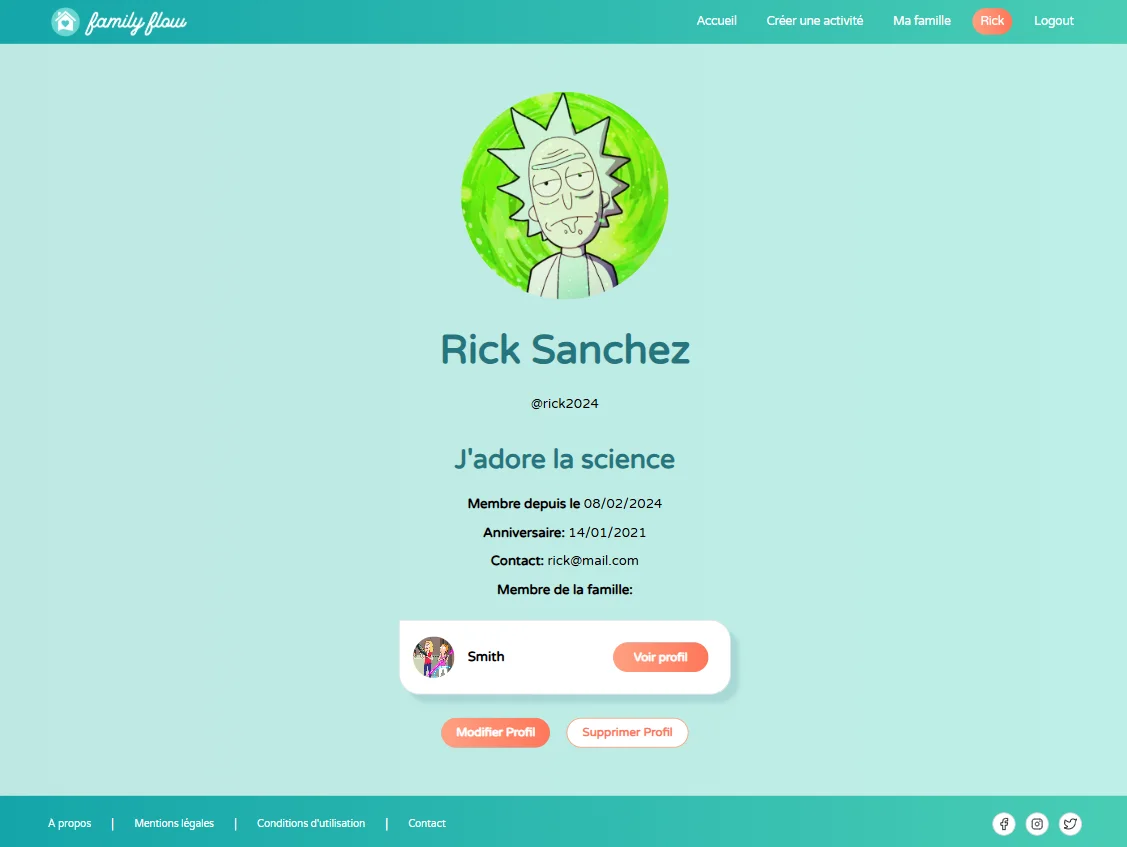
Outcomes
The MVP was shipped in under five weeks and tested by several families in real conditions. Feedback consistently highlighted its ease of use and calming UI. We opted to pause the roadmap as each of us transitioned to new major projects, but the foundations for future growth remain strong.
What I Took Away
This project was my first true end-to-end development experience. More than just code, it taught me how to build a coherent product with a clear purpose from the ground up.
I learned how to turn an idea into a structured project by starting with the fundamentals: understanding the problem, identifying the target users, analyzing their real needs, and defining clear personas. From this foundation, we built a product vision focused on usefulness, simplicity, and efficiency.
I gained a solid understanding of product strategy: how to define a lean but impactful MVP, write clear and actionable user stories, and design intuitive UI/UX flows tailored to families. Every technical and design decision was made to support a consistent and engaging user experience.
On the technical side, I strengthened my skills in designing robust software architectures and developing responsive designs. I also advanced in cybersecurity, agile methodologies, collaboration with Git/GitHub, and remote teamwork. I learned to manage project versioning effectively, quickly identify and fix bugs, deploy a product online, and improve it continuously based on user feedback, all within tight deadlines.
Equally important, I experienced the reality of product delivery: balancing vision and constraints, making trade-offs, while delivering a fully functional and reliable solution on time.
Finally, my background in Entrepreneurship and Business Creation at HEC Montréal was instrumental in shaping this project. It gave me the invaluable opportunity to think not only as a developer but also as a product manager, someone who imagines, designs, and delivers useful solutions that are perfectly aligned with the target market, and for that I am deeply grateful.